
The Best Ping Pong Balls: Rated & Reviewed (2026 Guide)
Why You Should Trust Us
The Bottom Line
If you’ve played table tennis in the last decade, you’ve witnessed the largest technical shift in the sport’s modern history: the transition from highly flammable 38mm and 40mm celluloid balls to the current 40mm+ plastic (poly) balls.
When the International Table Tennis Federation (ITTF) mandated this change to improve safety and slow the game down slightly for television audiences, the market was thrown into chaos. It was flooded with terrible seamless plastic balls that wobbled aggressively in the air, cracked after a single edge hit, and felt heavy and dead on the paddle.
Fast forward to 2026, and the manufacturing processes have finally perfected the poly ball. However, the gap between a genuine 3-star tournament ball and a cheap department store bucket is wider than ever. You can easily sabotage your own training by practicing with balls that have inconsistent bounces or egg-shaped circumferences.
We’ve hit thousands of forehand loops with dozens of brands to find the balls that offer true roundness, consistent bounce, and the durability to survive intense training sessions. Whether you are playing in a sanctioned USATT tournament or just want a massive bucket to feed your living room practice robot, these are the top three choices to elevate your game.
The Great Celluloid to ABS Plastic Shift: Why it Matters
Before diving into our top picks, it is vital to understand why you are buying the balls recommended below. If you buy old stock or cheap unbranded balls, you are likely getting inferior material.
1. The Death of Celluloid
For decades, ping pong balls were made of celluloid. They were fast, bouncy, and took spin incredibly well. They were also highly flammable (classified as hazardous material for shipping) and degrading to the environment. The ITTF banned them from competition. If you find celluloid balls today, do not use them for serious modern training. They play differently than what you will face in any club or tournament setting today.
2. Early Plastic and Seamless Disasters
The first generation of non-celluloid “poly” balls were largely seamless. Manufacturers thought removing the seam would make the ball perfectly round. Instead, the cooling process of the plastics resulted in balls that were thicker on one side than the other. This created a profound “wobble” mid-flight, making reading spin nearly impossible. They were also incredibly brittle.
3. The Modern Era: Seamed ABS Plastic
Today, the best balls in the world use Acrylonitrile Butadiene Styrene (ABS) polymer, and almost all of them feature a seam. Modern manufacturing has perfected the welding of the two halves, resulting in a ball that is far more durable, consistently round, and plays closer to the legendary celluloid balls of the past. All three of our top recommendations utilize modern ABS construction.
🥇 #1. Top Pick: Nittaku Premium 40+
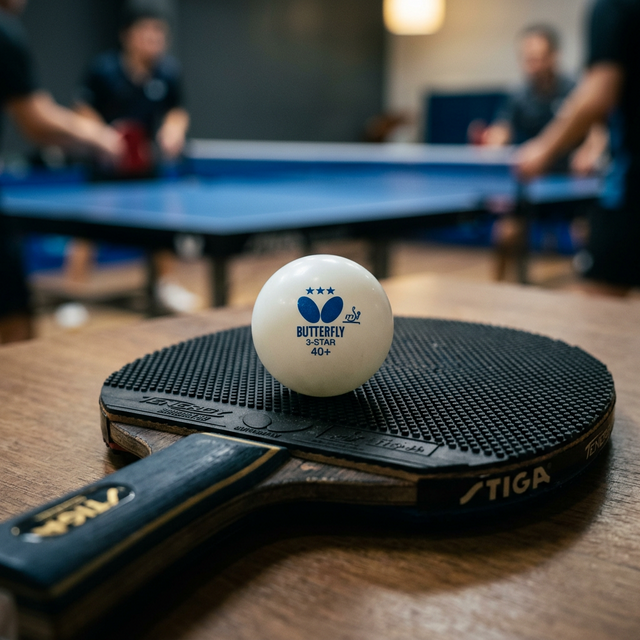
Beyond its perfect flight characteristics, the Nittaku Premium's true value lies in its sheer durability. The Japanese ABS plastic provides a slightly harder, more robust shell. While you might pay a premium upfront, you will rarely experience edge-hit cracks, making them surprisingly cost-effective for competitive players over the long term. They are the official ball for major ITTF World Championships for a reason.
- Perfect true-round bounce across batches
- Extremely durable Japanese poly material
- Official ITTF Approved standard
- Plays the closest to vintage celluloid
- Premium price tag per ball
- Counterfeits exist (buy from trusted sellers)
What the Community Says
If you browse any serious table tennis forum like Reddit’s r/tabletennis, the consensus is clear: the Nittaku Premium 40+ is untouchable. Players frequently remark, “If you can afford them, you buy them.” The primary praise centers on the ball’s seamless-like concentricity despite having a seam, and its ability to withstand horrific edge hits that would shatter lesser plastics.
🥈 #2. Premium Workhorse: Butterfly A40+
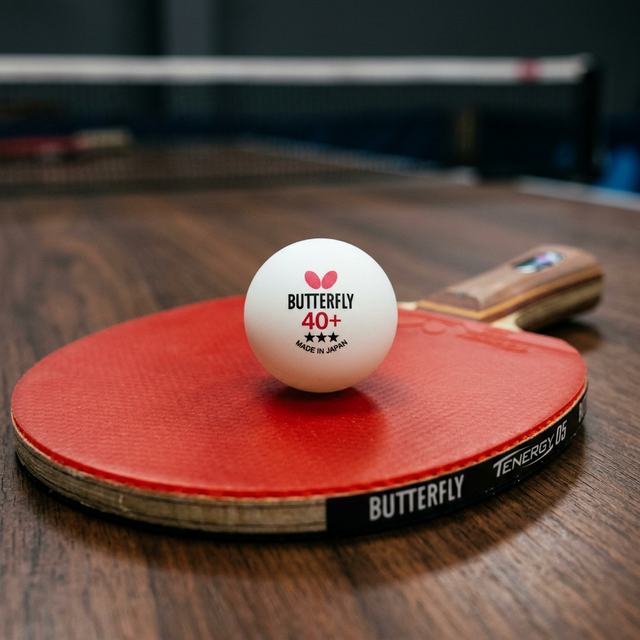
While it might not possess the exact same legendary durability record as the Japanese-made Nittaku, the A40+ is universally trusted for its uniform thickness and strict quality control. If you prefer a faster ball that feels extremely solid on impact, the Butterfly A40+ is an elite, heavily vetted choice.
- Crisp, hard feel off the sponge
- Exceptional quality control
- Slightly cheaper than Nittaku Premium
- Can feel "heavy" to players used to softer celluloid
🥉 #3. Best Value for Training: PROSPIN 3-Star
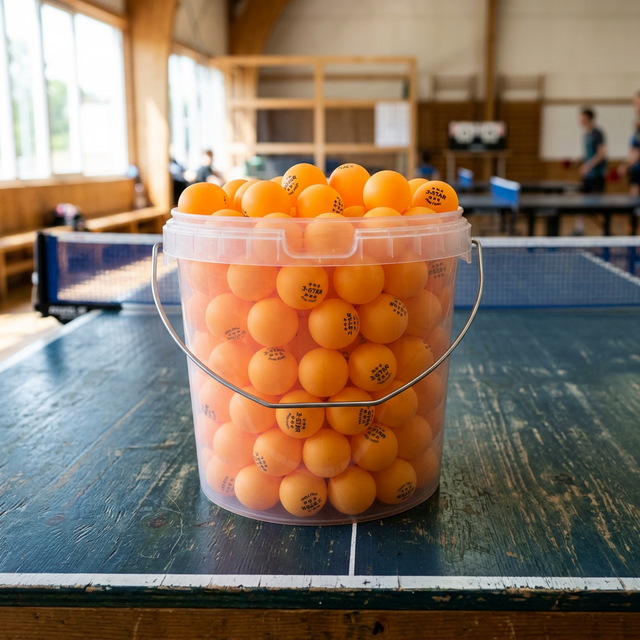
At a fraction of the cost per ball, the PROSPINs still meet strict ITTF size and weight regulations. Our testing showed that while you might occasionally find a ball with a micro-wobble inside a bucket of 100, the overall batch quality is shocking for the price point. These are the undisputed champions for multi-ball training, robot feeding, and casual garage tournaments where volume matters more than absolute perfection.
- Unbeatable cost-per-ball ratio
- High volume for robots and multiball
- Surprisingly durable for budget tier
- Batch consistency is not 100%
- Occasional "egg" shapes found in large buckets
The Ultimate Buyer’s Guide: How to Choose Ping Pong Balls
Still unsure what to buy? Let’s break down the actual metrics that define a good ping pong ball, ensuring you don’t waste your money on marketing hype.
1-Star vs. 2-Star vs. 3-Star Ratings
The star rating system is universal across brands, but it is not regulated. A 3-star ball from a gas station is not the same as a 3-star ball from Butterfly.
- 1-Star / No Star: These are leisure or “beer pong” balls. They are usually very soft, crush easily, and have wild flight paths due to poor seam welding. Avoid these for actual table tennis.
- 2-Star: These are training balls. They are often the balls that failed the strict quality control tests to become 3-star balls. They are decent for robot practice, but you may as well buy a good brand’s bulk 3-star pack (like the PROSPINs above) instead.
- 3-Star: These are tournament-grade balls. They represent the highest quality control the manufacturer can offer. They are the roundest, hardest, and most consistent. If you are playing a match, you should be using a name-brand 3-star ball.
Seamed vs. Seamless Construction
As mentioned earlier, seamless balls were a failed experiment in the early days of the plastic transition.
- Seamless: Brands like Xushaofa championed these. They have no equator seam. While they sound great in theory, they are prone to hidden thickness variations, making them wobble. They also shatter catastrophically on hard edge hits because they cannot distribute the impact force evenly.
- Seamed (ABS): This is the modern standard. Manufacturers take two perfect hemispheres of ABS plastic and weld them together. The seam acts like an equator, giving the ball deep structural integrity. Premium balls (like the Nittaku) sand down the seam so perfectly that you cannot feel it with your fingernail.
Durability and Cost-Effectiveness
It is very tempting to buy the cheapest box of balls you can find on Amazon. However, you must calculate the cost over time. If you buy a $10 pack of 12 generic balls, but they break every third game, you will burn through them in a month.
If you spend $25 on a 12-pack of Nittaku Premium 40+, you might not break one for three months. A harder plastic shell means less cracking, less deformation under heavy spin, and ultimately, less money spent over the course of a tournament season.
ITTF Approval
If you plan to play in official sanctioned tournaments, you must practice with ITTF Approved balls. The International Table Tennis Federation tests balls for perfectly strict tolerances:
- Diameter: Must be between 40.00mm and 40.60mm.
- Weight: Must be exactly between 2.67g and 2.77g.
- Roundness: Difference between minimum and maximum diameter cannot exceed 0.25mm.
Only balls that pass these agonizingly strict metrics get the ITTF stamp visible on the face of the ball.
Final Thoughts
Don’t overcomplicate your purchase. If you are serious about table tennis and want the ball that is going to give you the most predictable bounce and longest lifespan, buy the Nittaku Premium 40+. If you need to fill a ball-catcher net for an hour of multi-ball drills, grab the PROSPIN 3-Star bucket.
By avoiding cheap department store plastic, your loops will land deeper on the table, your pushes will stay lower, and your game will improve faster.
Frequently Asked Questions
What is the difference between 1-star, 2-star, and 3-star ping pong balls?
Star ratings indicate roundness, consistency, and bounce uniformity. 3-star balls are competition-grade with the tightest tolerances — every ball performs identically. 1-star balls have slight variations and are best for practice and robot training. 2-star balls fall in between and are ideal for casual play.
Are ABS balls better than celluloid?
ABS (poly) balls replaced celluloid as the ITTF standard in 2014 due to fire safety concerns. ABS balls are slightly harder, produce less spin, and last longer than celluloid. All tournament play now requires ABS balls. There is no reason to buy celluloid in 2026.
How many ping pong balls should I buy?
Buy in bulk — a 72-pack is the sweet spot. Balls crack, dent, and go missing. Having 50+ on hand means you can fill a robot, have spares for practice, and never interrupt a session to hunt for balls. At $0.15-0.50 per ball in bulk, it is a trivial investment.
Do colored balls play differently than white?
No — the color has zero effect on performance. Orange balls are easier to see against white walls and ceilings, which is why many clubs prefer them. White balls are the traditional tournament standard. Choose based on your playing environment’s background color.